Garlic
Botanical classification
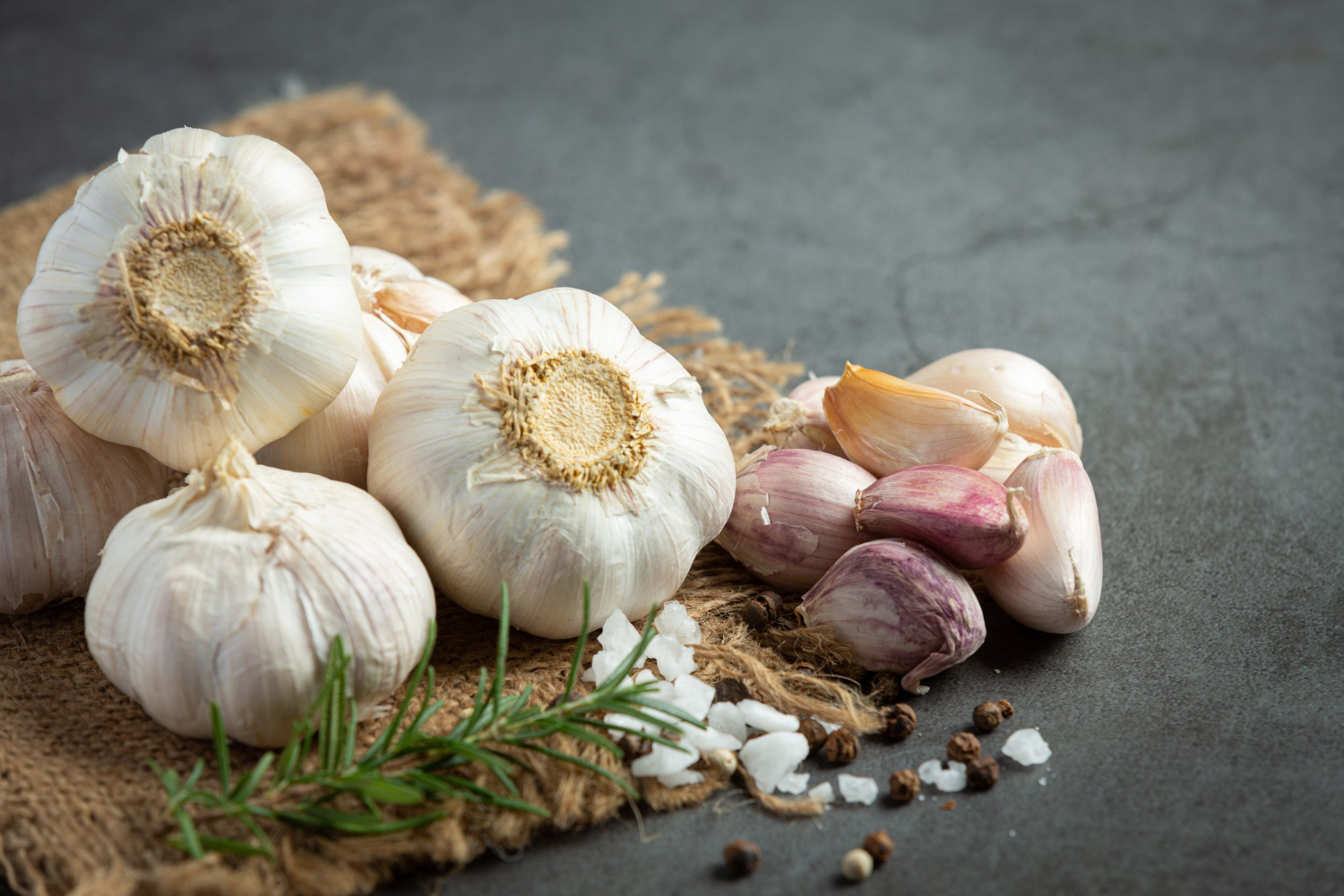
Garlic is a vegetable that’s part of the onion family and the lily family. It has a bulb, stem, and leaves, and is made up of many smaller pieces called cloves.
Origin
Garlic is native to Asia and has been used as a food source and medicinal plant for over 7,000 years. Records show that it was used in Egyptian and Indian cultures around 5,000 years ago, and the Chinese used it between 2,000 and 4,000 years ago.
Production
China produces most of the world’s garlic, supplying around 80% of the total, and is the leading exporter. California produces most of the garlic in the United States.
Taste and smell
Garlic has a strong flavor and sulfurous smell due to allicin, an oil that’s also antibacterial. The flavor is most intense when the garlic is first cut or chopped, and is caused by a chemical reaction that occurs when the garlic cells break.
Health benefits
Garlic contains vitamins A, C, and B6, as well as manganese, selenium, and fiber. It may help to lower blood pressure and cholesterol levels, boost the immune system, and protect against cancer. Some other potential health benefits include improving digestion, brain function, and skin health, and balancing blood sugar.